Table of Contents
If you are evaluating capsule-based pharmaceutical or nutraceutical production, one of the first decisions you will face is choosing between hard capsule filling and softgel (soft capsule) encapsulation. Both technologies produce capsules, but they are fundamentally different in how they work, what they can hold, and what they cost to produce at scale.
This guide breaks down every key dimension so you can make an informed decision based on your product, market, and budget.
What Are Hard Capsules?
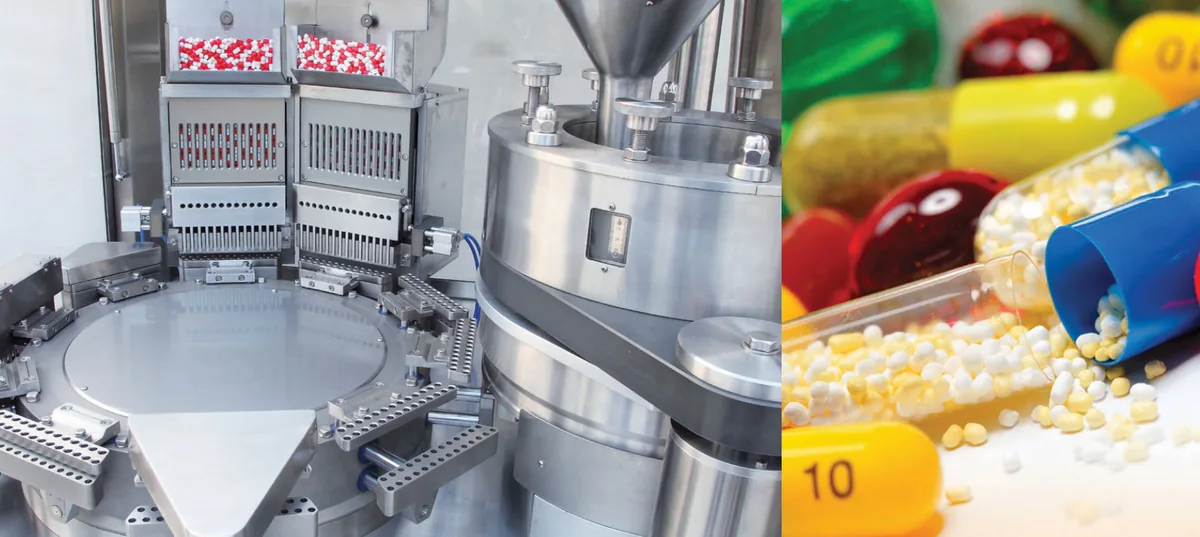
Hard capsules consist of two pre-formed shells — a body and a cap — that are manufactured separately, typically from gelatin or HPMC (plant-based), then filled with product and joined together. The filling happens at room temperature or with mild warming.
Hard capsules are the most widely used oral solid dosage form globally, found in everything from antibiotics to supplements.
What Are Softgel Capsules?
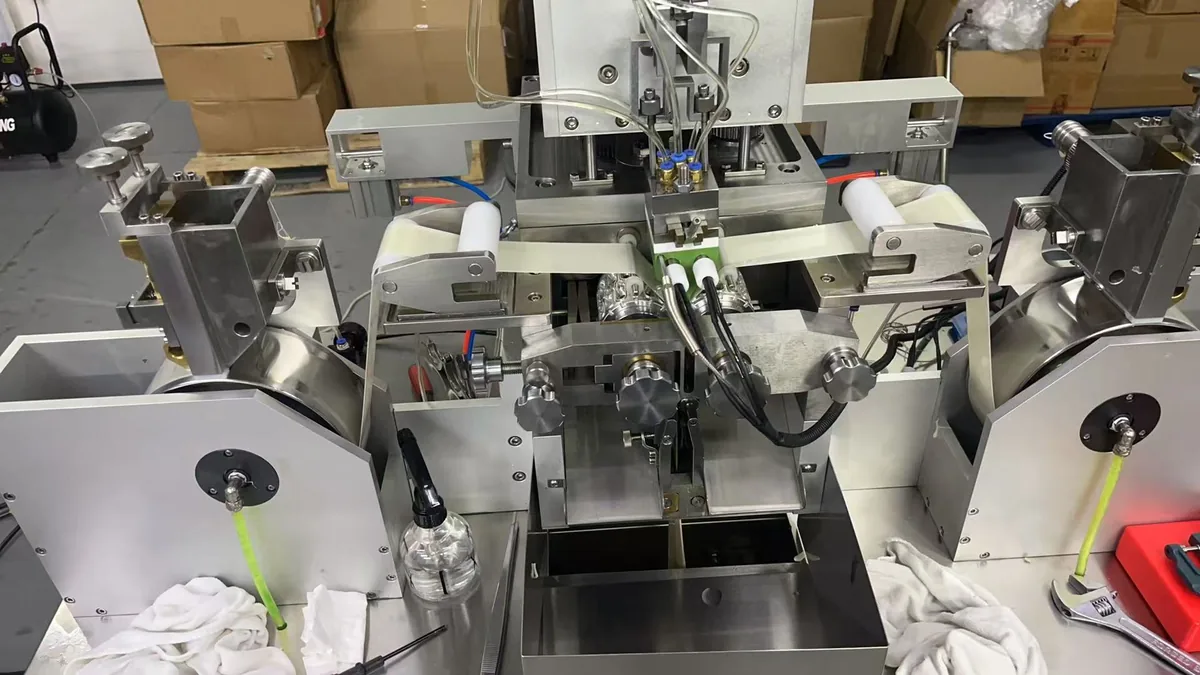
Softgel capsules are manufactured in a single operation where a gelatin or HPMC ribbon is formed around a liquid or semi-solid fill using rotary die technology. The capsule is sealed and ejected in one continuous process.
Softgels are commonly used for oils, suspensions, and active ingredients that need to be protected from oxygen or light — think fish oil, vitamin D, or probiotics.
Head-to-Head Comparison
| Factor | Hard Capsules | Softgel Capsules |
|---|---|---|
| Fill type | Powder, pellets, granules, micro-tablets | Liquids, suspensions, pastes, semi-solids |
| Sealing | Mechanical lock (cap/body snap) | Heat/seal (die rolls) |
| Production speed | Up to 228,000 caps/hour | Up to 60,000 caps/hour |
| Batch size | Small to very large | Medium to large |
| Shell material | Gelatin, HPMC, pullulan | Gelatin, HPMC (standard vs. enteric) |
| Oxygen/moisture barrier | Moderate (depends on shell) | Excellent (hermetic seal) |
| Capital cost | Lower ($40K–$200K) | Higher ($80K–$400K+) |
| Typical ROI threshold | 5M+ capsules/year | 10M+ capsules/year |
When to Choose Hard Capsule Filling
Hard capsules are the right choice when:
- Your formulation is a dry powder, granules, or micro-tablets
- You need flexibility to run multiple products on the same equipment
- You are serving markets with strict vegetarian/halal/kosher requirements (HPMC shells)
- You need frequent changeovers between different capsule sizes (00 to 5)
- Your production volume is medium scale and growing
- You are targeting clinical trials or R&D batches (small minimum batch sizes available)
When to Choose Softgel Encapsulation
Softgels are the right choice when:
- Your active ingredient is oil-based, oxygen-sensitive, or photosensitive
- You need superior bioavailability (softgel absorption is typically 20–50% higher for lipophilic compounds)
- You want custom shapes and sizes for brand differentiation
- Your product is a pharmaceutical requiring precise dosing of liquid formulations
- Consumer preference is strong (softgels feel "premium" in supplement markets)
The YohoAI Recommendation
Our View After 15+ Years
For most new entrants into pharmaceutical or premium nutraceutical production, we recommend starting with hard capsules for powder formulations due to lower capital requirements and greater production flexibility. If your product roadmap includes oil-based formulations, consider adding softgel capacity as a second phase. YohoAI offers both equipment lines with integrated installation and training.
Can You Run Both on One Line?
No — hard capsule filling and softgel encapsulation require fundamentally different equipment. However, many contract manufacturers run both technologies side by side. If you are building a full-service facility, YohoAI can supply both lines with compatible documentation packages (IQ/OQ/PQ protocols, GMP manuals) to streamline your regulatory submissions.
What About Combination Products?
Some formulations benefit from a two-piece hard capsule containing a powder plus a softgel mini-capsule inside — this "capsule-in-capsule" approach is increasingly popular for combination supplements. YohoAI can supply compatible equipment and process guidance for these advanced delivery formats.
Key Takeaways
- Hard capsules = powders, pellets, flexibility, lower cost, faster changeovers
- Softgels = liquids, superior barrier, premium feel, higher bioavailability
- Choose based on your formulation, volume, and market positioning
- YohoAI offers both equipment lines with turnkey installation in 30+ countries
- Many producers start with hard capsules and add softgel later — a practical phased approach
Ready to Choose Your Capsule Equipment?
Our engineers help you select the right technology based on your formulation and production goals.
Request Technical Proposal WhatsApp Us