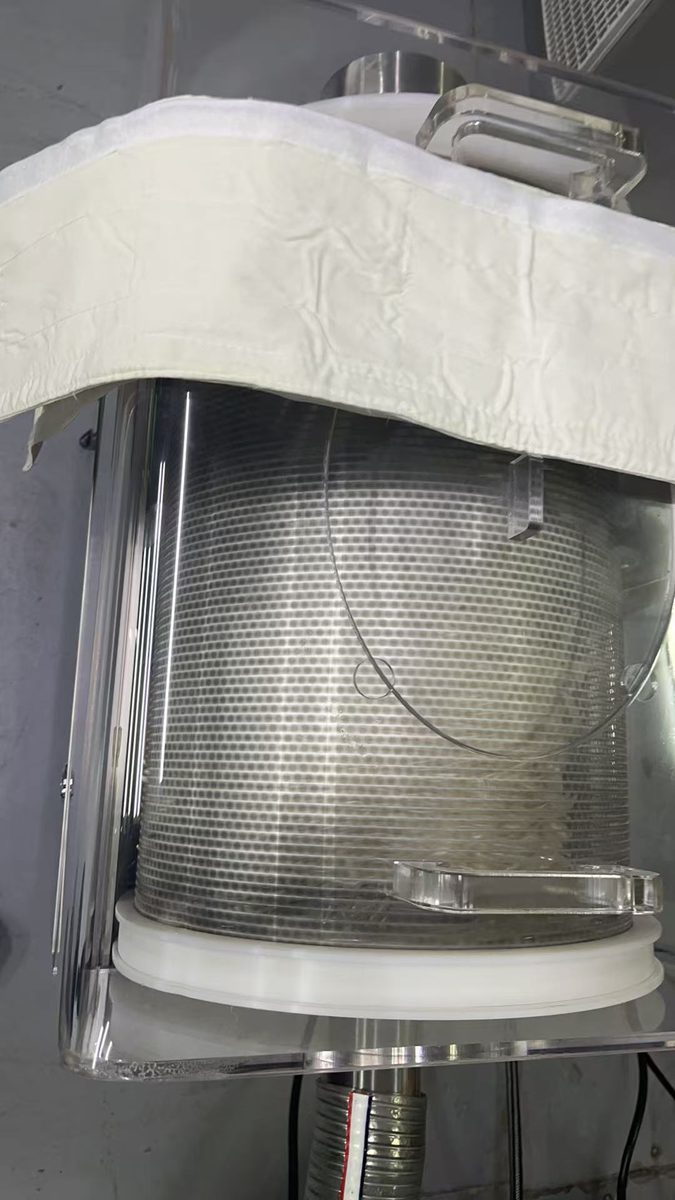
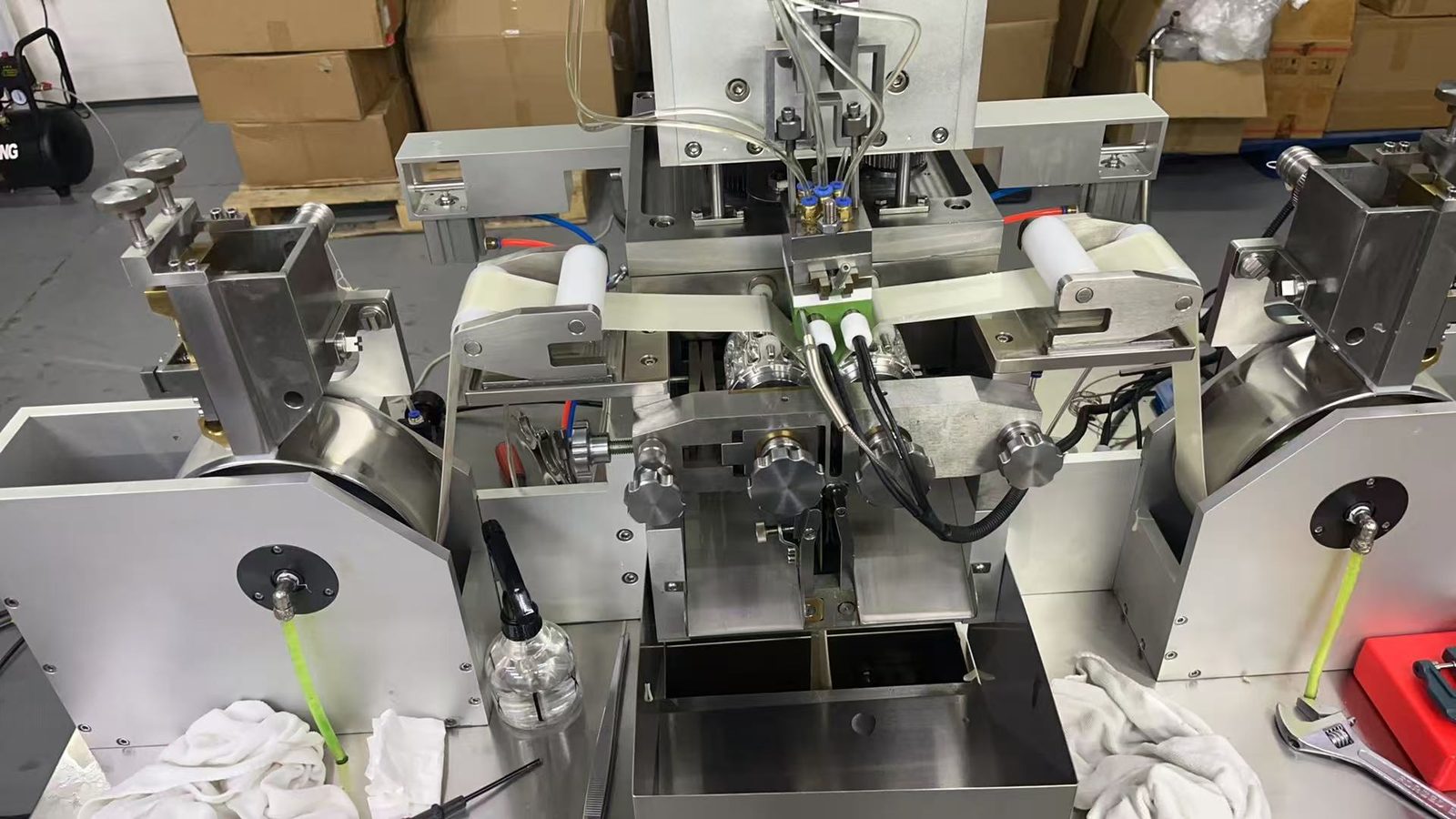
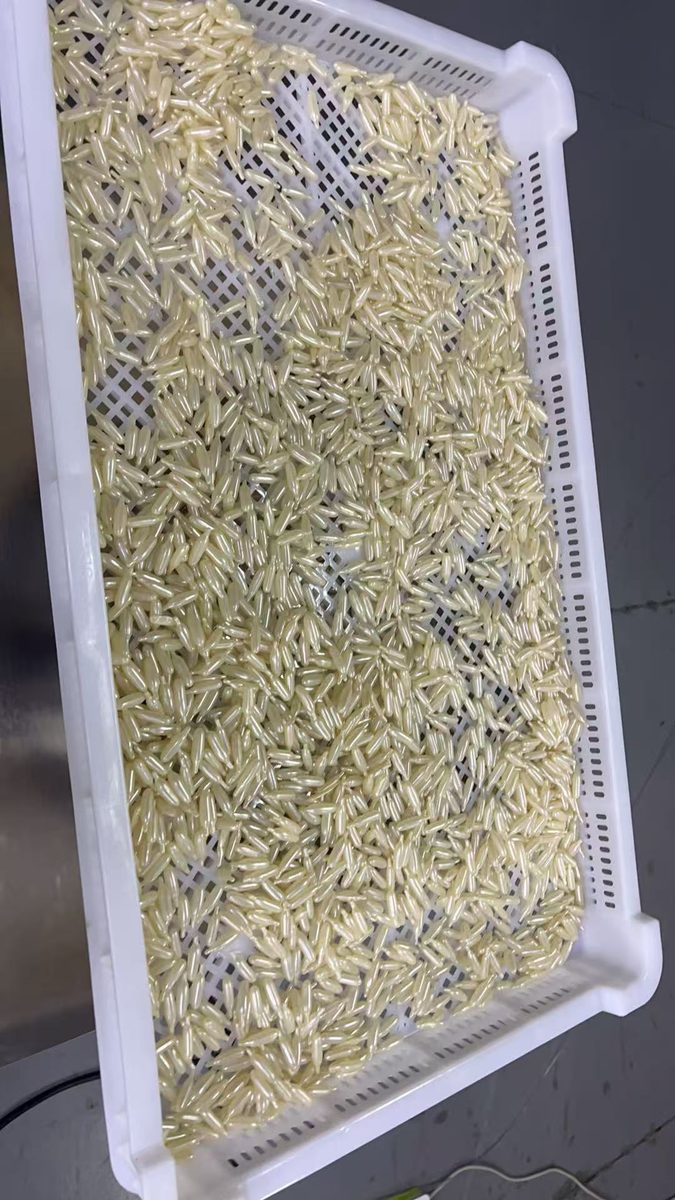
Compact rotary die encapsulator for R&D, pilot production and clinical trials - 5,000 to 10,000 capsules per hour.
The RG-100 is a single-station laboratory softgel encapsulation machine built for formulation development, clinical trial batches, and small-scale contract manufacturing. With a minimum practical batch of just 500 capsules, it brings pilot-scale flexibility to your lab.
Verified factory data - not marketing estimates
Servo-controlled gear pump with +/-2% accuracy, suitable for oils, suspensions and pastes.
Minimum batch of 500 capsules for formulation screening and bioavailability studies.
Tool-free die roll swap in 15-30 minutes for multiple capsule shapes.
Standard HPMC and pullulan shell support for halal and kosher formulations.
7-inch touch screen with recipe storage and production data export.
316L stainless steel, CIP-compatible, full DQ/IQ/OQ/PQ documentation.
Our team responds within 2 hours with CIF/CFR/FOB pricing and delivery timeline.
The RG-100 laboratory model typically costs USD 15,000 to 25,000 depending on configuration and accessory requirements. Chinese-built rotary die machines deliver 40 to 60 percent savings versus European brands while meeting the same CE, cGMP and ISO 9001 standards. Final pricing depends on automation level and documentation needs.
The single-station RG-100 produces 5,000 to 10,000 capsules per hour with a minimum practical batch of only 500 capsules. This output suits formulation development, clinical trial supplies, and pilot contract manufacturing where production flexibility matters more than raw throughput. Its compact design fits pilot labs easily.
The machine processes gelatin, HPMC (hydroxypropyl methylcellulose), and pullulan shells. Temperature, humidity, and dosing speed are adjustable per material. HPMC vegetarian capability is standard, supporting halal and kosher formulations for supplement and pharmaceutical clients. The RG-100 is ready for clean-label and plant-based product lines without additional tooling or capital investment.
Die roll changeover takes 15 to 30 minutes using the quick-release mechanism with no tools required. By swapping dies you can produce oval, oblong, round, cylindrical, and custom shapes within a 5 to 24 mm size range, or 3 to 30 mm custom.
The RG-100 handles a minimum practical batch of 500 capsules, far below the 2,000 to 5,000 capsule minimum typical of production models. This makes it ideal for R&D screening, clinical trial material, and small contract batches without wasted product. Researchers can test many formulations cost-effectively.
Yes, included at no extra cost. Our engineers provide 5 to 7 days of on-site installation, commissioning, and operator training. We also offer a free process trial at our Shanghai factory covering formulation compatibility, appearance evaluation, and parameter optimization. Remote support continues after handover.
Machines are CE certified and built to cGMP, FDA 21 CFR Part 11, and ISO 9001 standards. Documentation includes material certificates, weld records, surface finish measurements, DQ/IQ/OQ/PQ protocols, calibration certificates, and operation manuals for FDA, EMA, and Health Canada filings.
The RG-100 runs on 380V/50Hz three-phase power at 4.5 kW with a compact footprint of 1.2 m by 0.8 m. Compressed air at 0.5 to 0.7 MPa is required. Its small size fits easily into laboratory and pilot plant environments.
Prepare the installation site before machine arrival. The RG-100 requires a clean, climate-controlled laboratory environment at 22-26 deg C and 30-45% relative humidity. Three-phase 380V/50Hz power at 4.5 kW with a dedicated circuit and grounding is essential. Compressed air at 0.5-0.7 MPa must be plumbed to the machine location. Ensure the floor can support the equipment weight and provides adequate clearance for operator movement on all sides.
Perform daily operational checks to maintain capsule quality and machine longevity. Before each production run, verify the gelatin or HPMC shell temperature and viscosity, inspect die rolls for surface wear, and run a short test batch to confirm filling accuracy within the +/-2% tolerance. Monitor the 7-inch HMI for any alarm flags and check the gear pump for unusual noise or pressure fluctuations. Record all readings in the production log for traceability and trend analysis.
Schedule regular preventive maintenance to maximize uptime and capsule quality. Weekly tasks include cleaning the gelatin delivery manifold with food-grade solvent and inspecting sealing surfaces for contamination. Monthly actions cover CIP cleaning cycles, O-ring and seal replacement, and verification of the servo pump calibration against the factory certificate. Annual service should include full die roll inspection, motor drive evaluation, and re-validation of the DQ/IQ/OQ/PQ documentation package to maintain regulatory compliance.